


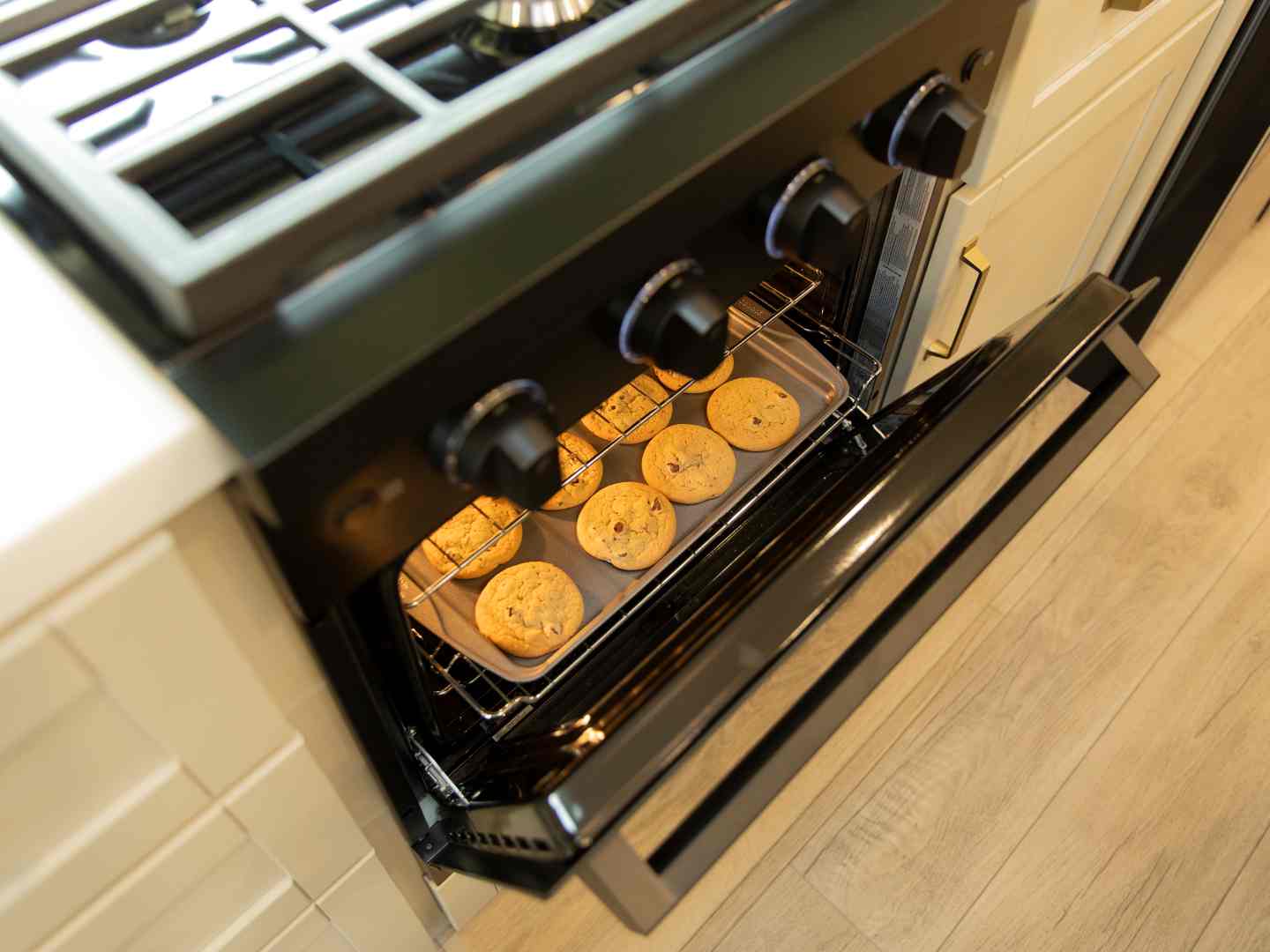
An RV oven upgrade involves replacing, adding, or improving an oven to expand your cooking capabilities on the road. For some travelers, an oven makes it easier to bake, roast, and prepare full meals without relying on restaurants. For others, the space an oven occupies may be more valuable as storage, especially when alternative RV cooking appliances can handle many of the same tasks. Deciding between an RV oven upgrade and an RV stove upgrade comes down to how you cook, how often you travel, and how you use your RV kitchen.
Why RV Kitchen Upgrades Are Changing
RV kitchens have evolved significantly over the past decade. As manufacturers focus on lighter, more efficient floorplans, travelers are rethinking which appliances deserve permanent space in the coach. At the same time, portable cooking technology has expanded, giving RV owners more options than ever before.
This shift has created an increasingly common question when upgrading an RV kitchen: Do you really need an oven, or would a stove-focused setup better suit your travel style? The answer depends less on the appliance itself and more on how you prepare meals while traveling.
Why RV Ovens Are Becoming Less Common
Many new RV floorplans either offer smaller ovens or eliminate them altogether. Several factors are driving this trend.
1. Smaller, Lighter RV Designs
Manufacturers continue to prioritize weight reduction and flexible floorplans. Eliminating an oven creates opportunities for additional storage while helping keep overall vehicle weight lower.
2. Greater Demand for Storage
Storage is often one of the most requested features among RV owners. The space occupied by an oven can be converted into cabinets, drawers, or pantry storage that may see more frequent use.
3. Alternative Appliances Continue to Improve
Today's RVers have access to a variety of compact cooking solutions, including:
- Convection microwaves
- Air fryers
- Portable induction cooktops
- Toaster ovens
- Multi-cookers
Many of these appliances perform multiple cooking functions while requiring less permanent installation space.
4. Outdoor Cooking Is More Popular
Campground kitchens have expanded beyond traditional grilling. Portable griddles, outdoor kitchens, and dedicated camp cooking setups allow travelers to prepare meals outside and reduce heat buildup inside the RV.
5. Cost & Simplicity
Removing the oven from a floorplan can lower manufacturing costs and simplify appliance installation and maintenance requirements.

What an RV Oven Upgrade Brings to Your Kitchen
Although ovens have become less common in some RVs, they remain valuable for many travelers.
More Cooking Options
One of the biggest advantages of an RV oven upgrade is the ability to bake and roast foods that are difficult to prepare on a stovetop.
Examples include:
- Casseroles
- Roasted vegetables
- Homemade pizza
- Cookies and desserts
- Breads and biscuits
- Large family meals
Better for Extended Travel
Travelers spending weeks or months on the road often appreciate the flexibility an oven provides. Cooking a wider variety of meals can reduce dependence on restaurants and convenience foods.
A Familiar Cooking Experience
Many RV owners enjoy preparing meals the same way they do at home. An oven allows for a more traditional kitchen workflow, especially for those who regularly bake.
Supports Family Meal Preparation
Families traveling together may find ovens especially useful because multiple components of a meal can cook simultaneously. A stovetop and oven combination can significantly increase meal-preparation flexibility.
RV Stove Upgrade vs. RV Oven Upgrade: Key Differences
When deciding between an RV stove upgrade and an oven upgrade, understanding the strengths of each option can help narrow your choice.
What an RV Stove Upgrade Improves
A stove upgrade typically focuses on:
- Improved burner performance
- Better temperature control
- Enhanced cooking efficiency
- More durable cooking surfaces
- Faster meal preparation
For RV owners who primarily prepare stovetop meals, upgrading the stove may provide greater day-to-day value.
What an RV Oven Upgrade Adds
An oven upgrade expands cooking methods rather than simply improving existing performance.
Benefits include:
- Baking
- Roasting
- Broiling capabilities in some models
- Increased meal variety
- Greater capacity for group cooking
When a Stove Upgrade Makes More Sense
A stove-focused upgrade may be the better investment if:
- You rarely bake at home
- Most meals involve skillets, pots, or pans
- You primarily take weekend trips
- Storage space is limited
- You already use alternative cooking appliances

Combining a Stove Upgrade with Other Appliances
Many RV owners choose a hybrid approach by upgrading the stove and supplementing it with:
- Air fryers
- Convection microwaves
- Portable induction cooktops
- Multi-cookers
This setup can provide substantial versatility while preserving valuable storage space.
Drawbacks to Consider Before an RV Oven Upgrade
Before committing to an RV oven upgrade, it is important to understand the trade-offs.
Reduced Storage Space
An oven occupies permanent cabinet space that cannot be used for food, cookware, or other essentials.
Added Weight
Every appliance contributes additional weight to the RV. Depending on the unit and installation, this may affect cargo capacity, towing considerations, or fuel efficiency.
Interior Heat Generation
Ovens can significantly increase interior temperatures, especially during summer travel. In smaller RVs, the heat can become noticeable quickly.
Fuel & Power Considerations
Many RV ovens operate using propane. Travelers should consider fuel consumption, refill access, and overall energy management when selecting appliances.
Maintenance Requirements
Like any appliance, ovens require routine cleaning and occasional servicing to maintain safe and efficient operation.
Will You Actually Use an RV Oven? Key Questions to Ask
One of the most useful exercises before investing in a kitchen upgrade is evaluating your actual habits.
How Do You Cook at Home?
If baking and roasting are already part of your routine, an oven will likely see regular use on the road. If most meals happen on a stovetop, an oven may have limited value.
What Is Your Travel Style?
Weekend travelers often have different needs than full-time RVers. Short trips may involve:
- Dining out
- Simple meals
- Outdoor grilling
Long-term travel often benefits from more complete kitchen capabilities.
Where Do You Camp?
Climate matters. In hot regions, many RV owners avoid using ovens because of additional cabin heat. In cooler climates, oven heat may be less of a concern.
How Many People Are You Feeding?
Cooking for one or two people may not require an oven. Larger families often benefit from the additional cooking capacity.
What Other Cooking Equipment Do You Have?
Existing outdoor kitchens, grills, and portable appliances can reduce the need for a built-in oven.
Alternatives to an RV Oven Upgrade
If your question is: Do you need an oven in an RV?, several alternatives may provide a better fit.
Convection Microwave
The ongoing discussion of RV oven vs. microwave often centers on versatility. Convection microwaves can handle reheating, baking, and roasting functions while occupying less space than separate appliances.
Air Fryers & Toaster Ovens
Many RV owners prefer these appliances because they:
- Heat quickly
- Use less energy
- Cook efficiently
- Perform multiple cooking functions
Induction Cooktops
Portable induction units offer precise temperature control and efficient cooking when shore power or sufficient electrical capacity is available.
Outdoor Cooking Stations
Grills, griddles, and portable camp kitchens remain popular solutions for RV meal preparation.
Slow Cookers & Multi-Cookers
These appliances simplify meal preparation while minimizing active cooking time and conserving kitchen space.
When an RV Oven Upgrade Makes Sense
An oven upgrade is most beneficial when it aligns with how you travel and cook.
-
Full-Time RVers: People who live in their RV full-time often appreciate having kitchen capabilities that feel closer to home.
-
Families and Group Travelers: The ability to cook larger meals efficiently makes ovens especially useful for families.
-
Cold-Weather Camping: During cooler seasons, oven use may be more comfortable because added heat becomes less of a concern.
- Travelers Who Cook from Scratch: Those who regularly prepare meals using fresh ingredients often benefit most from an oven's flexibility.
Practical Considerations Before Upgrading
Before selecting an oven or stove, evaluate the practical aspects of installation and ownership.
-
Available Space: Carefully measure existing openings and verify compatibility with your RV's layout.
-
Power and Propane Requirements: Confirm available fuel connections and electrical support requirements before installation.
-
Weight Capacity: Review your RV's cargo carrying capacity and overall weight distribution.
- Budget and Usage: Consider how frequently the appliance will be used compared to its installation and ownership costs.
- Appliance Integration: In some cases, upgrading a complete range that includes both a stove and oven may provide the most streamlined solution. For RV owners evaluating modern kitchen appliance options, integrated cooking solutions from brands such as Furrion can help simplify kitchen functionality while maintaining a space-conscious design. The best choice depends on your floorplan, cooking habits, and available utilities.
- Evaluate Real-World Meal Planning: A helpful exercise is mapping out a typical week of RV meals. Track what you'd realistically cook while traveling and identify how often an oven would actually be used.
FAQs About RV Oven & RV Stove Upgrades
1. Is an RV oven upgrade worth it for short trips?
For many weekend travelers, an RV oven upgrade may not provide enough value to justify the space it occupies. Simple meals, outdoor cooking, and alternative appliances often meet short-trip cooking needs.
2. Can you replace an RV oven with a convection microwave?
Yes, many RV owners replace ovens with convection microwaves because they combine multiple cooking functions while using less space.
3. What's better: RV stove upgrade or oven upgrade?
It depends on your cooking habits. If you mainly cook on burners, a stove upgrade may deliver more everyday benefits. If you frequently bake or roast, an oven upgrade offers greater versatility.
4. Do you need an oven in an RV?
Not necessarily. Many RVers successfully cook without one by using microwaves, air fryers, induction cooktops, grills, or multi-cookers.
5. How much space does an RV oven require?
Space requirements vary by model and RV layout. Always measure available cabinet openings and confirm installation dimensions before purchasing.
6. Are RV ovens good for full-time living?
For full-time RVers who frequently cook from scratch, an oven can significantly expand meal options and improve kitchen functionality.
RV Oven vs. Cooktop vs. Stove: What’s the Difference?