


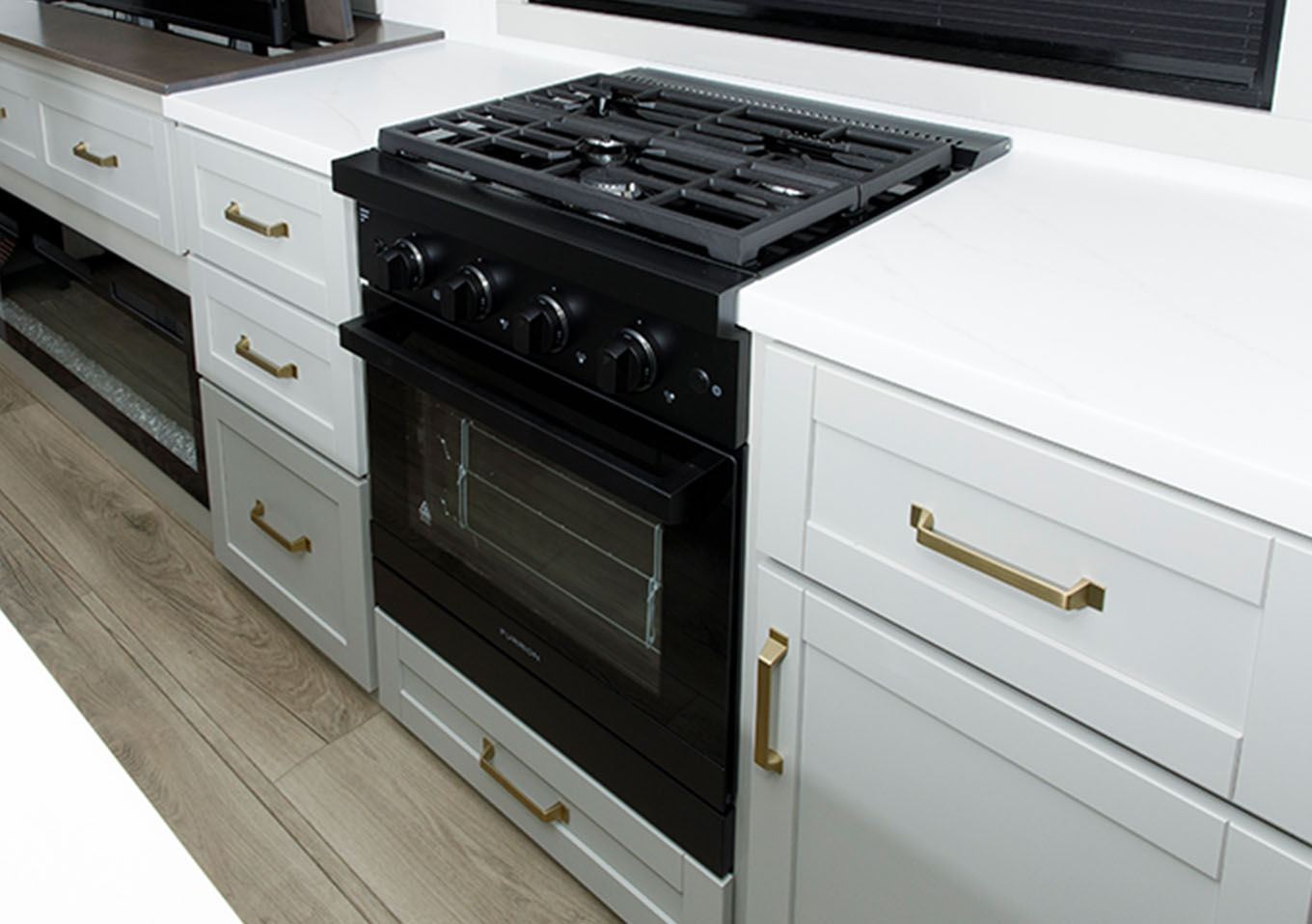
When comparing an RV oven vs. stove, the key difference is simple: an RV oven is an enclosed cooking chamber used for baking and roasting, while an RV stove typically refers to a complete cooking appliance that combines a cooktop and an oven in a single unit. In RV shopping and upgrade discussions, terms like range, stove, cooktop, and oven are often used interchangeably, which can create confusion. Understanding what each appliance actually does makes it much easier to choose the right cooking setup for your RV lifestyle.
Why Are There So Many RV Cooking Appliance Terms?
The RV industry uses a mix of technical and consumer-friendly language to describe cooking appliances. Manufacturers, dealers, and RV owners may use different terms for the same equipment, while some terms refer to distinct appliance types.
For example, a dealer may describe an appliance as an RV range, while an owner might call it a stove. Both terms generally refer to the same thing. Similarly, some RVers use stovetop and cooktop interchangeably, even though appliance manufacturers often prefer the term cooktop.
Clarity matters when shopping for a replacement appliance or planning an RV kitchen upgrade. Understanding these definitions helps ensure you choose a product that fits your space, power system, and cooking habits.
Why These Differences Matter for RV Owners
Cooking appliances affect much more than meal preparation in an RV. The right setup influences available storage space, energy consumption, installation requirements, and overall comfort on the road.
Space Constraints
RV kitchens have limited square footage. Every appliance must justify the space it occupies. A full range offers maximum cooking flexibility, while a cooktop paired with a microwave can free up valuable storage and counter space.
Power Sources
RV cooking appliances may use:
- Propane
- Shore power
- Generator power
- Battery systems with inverters
- Induction technology
The available power sources in your RV often determine which appliances make the most sense.
Cooking Habits
How you cook matters more than appliance terminology. Someone who primarily reheats meals has different needs than someone who regularly bakes casseroles, pizza, or fresh bread.
Quick Glossary of RV Cooking Appliance Terms
Before diving deeper, here's a simplified reference guide.
-
Oven: An enclosed cooking chamber that uses heat to bake, roast, or broil food.
-
Cooktop: A surface with burners or heating elements for stovetop cooking. It does not include an oven.
-
Stove: A combined cooking appliance that includes both a cooktop and an oven.
-
Range: Another name for a stove. In most cases, range and stove are synonymous.
-
Rangetop: A larger, premium-style cooking surface that resembles the top portion of a professional range without including an oven.
-
Stovetop: A casual term often used interchangeably with cooktop.
-
Microwave Oven: An electric appliance that cooks or reheats food using microwave energy.
-
Convection Oven: An oven that uses a fan to circulate hot air for faster and more even cooking.
-
Induction Cooktop: A cooktop that uses electromagnetic energy to directly heat compatible cookware.
-
Air Fryer: A compact appliance that circulates hot air rapidly to create crispy textures.
- Toaster Oven: A small electric oven suitable for baking, toasting, and reheating smaller portions.
RV Oven vs. Stove: Core Appliance Definitions & Differences
What Is an RV Oven?
An RV oven is an enclosed chamber designed for baking, roasting, and other traditional oven-based cooking methods. RV ovens are generally smaller than residential units but perform similar functions. Depending on the model, they may operate using propane or electricity.
Gas RV Ovens
Propane ovens remain common because they can function while camping without shore power. They provide reliable baking capability and are well suited for extended off-grid travel.
Electric RV Ovens
Electric ovens require a consistent power source but can offer more precise temperature control.

What Is an RV Cooktop?
A cooktop is a cooking surface containing burners or heating elements without an attached oven underneath. Cooktops are popular in smaller RVs because they maximize usable space while providing essential cooking functionality. Cooktops are available in several configurations.
Gas Cooktops
Propane cooktops are common throughout the RV market because they work efficiently during boondocking and extended camping trips.
Electric Cooktops
Electric cooktops rely on shore power or a suitable power system and provide straightforward operation.
RV Induction Cooktops
An RV induction cooktop uses electromagnetic fields rather than heated elements. The cookware itself becomes the heat source.
Benefits include:
- Faster heating
- Improved energy efficiency
- Responsive temperature adjustments
- Cooler cooking surface during operation
However, induction requires cookware with magnetic properties and sufficient electrical capacity.

RV Oven vs. Cooktop
When comparing an oven and a cooktop, the main distinction is cooking style. An oven expands your cooking possibilities, while a cooktop focuses on day-to-day stovetop meal preparation.
| Feature | RV Oven | RV Cooktop |
|---|---|---|
| Primary Function | Baking and roasting | Boiling, frying, sautéing |
| Enclosed Cooking Chamber | Yes | No |
| Space Requirement | Larger | Smaller |
| Power Options | Gas or electric | Gas, electric, or induction |
| Best For | Full meal preparation | Quick stovetop cooking |
What Is an RV Stove?
A stove combines both an oven and a cooktop into a single appliance. This all-in-one design remains one of the most common RV kitchen configurations because it delivers maximum versatility while conserving space compared with separate appliances.
RV Oven vs. Stove
This is where terminology often causes confusion. A stove already includes an oven. When people search for RV oven vs. stove, they are usually comparing:
- A standalone oven versus a complete stove.
- Appliances that include baking capability versus complete cooking systems.
| Feature | RV Oven | RV Stove |
|---|---|---|
| Includes Cooktop | No | Yes |
| Includes Oven | Yes | Yes |
| Functions | Baking and roasting | Baking, roasting, boiling, frying, sautéing |
| Space Needed | Moderate | Larger |
| Versatility | Moderate | High |
What Is an RV Range?
In appliance terminology, a range is generally the same thing as a stove. The terms are often interchangeable. This means that an RV range vs. cooktop comparison is essentially comparing:
- Range = oven + burners
- Cooktop = burners only
| Appliance Type | Cooking Method | Typical Power Source | Best Use Case |
|---|---|---|---|
| Oven | Baking, roasting | Gas or electric | Full meal preparation |
| Cooktop | Stovetop cooking | Gas, electric, induction | Daily cooking |
| Stove/Range | Combined cooking | Gas or electric | Maximum versatility |
| Microwave Oven | Reheating, simple cooking | Electric | Speed and convenience |
| Convection Oven | Baking, roasting, reheating | Electric | Faster, more even cooking |
| Induction Cooktop | Stovetop cooking | Electric | Efficiency-focused setups |
| Air Fryer | Crisping, roasting | Electric | Quick meals and snacks |
| Toaster Oven | Baking, toasting, reheating | Electric | Small-batch cooking |
Less Obvious but Commonly Confused Terms
Rangetop vs. Cooktop
A rangetop and cooktop both provide surface cooking, but they are designed differently.
Rangetops are usually:
- Larger
- More premium in appearance
- Equipped with front-mounted controls
- Higher-output cooking surfaces
Cooktops tend to be:
- More compact
- Easier to integrate into RV kitchens
- Better suited for limited spaces
Stovetop vs. Cooktop
For most RV owners, stovetop and cooktop mean the same thing. Both terms describe a surface cooking appliance that does not contain an oven.
RV Induction Cooktop vs. Electric Cooktop
An induction cooktop and a standard electric cooktop both use electricity, but they generate heat differently.
| Feature | Induction | Electric Radiant |
|---|---|---|
| Heating Speed | Fast | Moderate |
| Efficiency | High | Moderate |
| Cookware Requirements | Magnetic cookware required | Works with most cookware |
| Temperature Response | Very responsive | Slower response |
| Surface Heat | Lower residual heat | Higher residual heat |
For RV applications, power availability and cookware compatibility should be evaluated before choosing induction technology.
Convection Oven vs. Conventional Oven
A conventional oven relies on stationary heat. A convection oven uses a fan to circulate hot air around food. Benefits of convection include:
- Faster cooking times
- More even temperatures
- Better browning and crisping
These advantages help explain why many RV combination appliances incorporate convection technology.

RV Convection Oven vs. Microwave
Although many people compare these appliances, they serve very different purposes.
| Feature | Convection Oven | Microwave |
|---|---|---|
| Cooking Method | Hot circulating air | Microwave energy |
| Best For | Baking and roasting | Reheating and quick cooking |
| Texture Results | Crispy, browned foods | Softer foods |
| Cooking Speed | Moderate | Very fast |
Some RV appliances combine both technologies for additional flexibility.
Microwave vs. Microwave Oven
These terms refer to the same appliance. "Microwave" is simply the shortened version of "microwave oven."
Microwave Oven vs. Air Fryer vs. Toaster Oven
These compact appliances often compete for space in an RV kitchen.
Microwave
Best for:
- Reheating leftovers
- Quick cooking
- Convenience
Air Fryer
Best for:
- Crisping foods
- Roasting vegetables
- Creating fried-style textures
Toaster Oven
Best for:
- Toasting bread
- Small baking tasks
- Reheating foods with better texture than a microwave
Each offers different advantages depending on your cooking routine and available power.

Choosing the Right Setup for Your RV
The best RV kitchen appliances guide starts with how you actually cook while traveling.
If You Rarely Use an Oven
Many RV owners primarily prepare quick meals, grill outdoors, or reheat leftovers. A cooktop paired with a microwave or convection microwave often provides everything needed while preserving valuable space.
If You Cook Frequently but Keep It Simple
Stovetop meals such as pasta, soups, eggs, stir-fries, and one-pan dishes don't necessarily require an oven. A two or three-burner cooktop paired with a microwave or air fryer can provide substantial flexibility.
If You Enjoy Baking and Full Meal Preparation
Bakers and home-style cooks benefit from a full range. A combined cooktop-and-oven appliance supports:
- Casseroles
- Roasted meats
- Fresh baked goods
- Holiday meals
- One-dish recipes
If Speed and Convenience Matter Most
Travelers focused on efficiency often prefer:
- Microwave + air fryer
- Convection microwave combinations
These solutions minimize cooking time and simplify meal preparation.
If You Prioritize Efficiency and Modern Technology
An RV induction cooktop combined with a convection microwave or air fryer can create a highly efficient cooking setup when adequate electrical power is available.
Practical Shopping Tips
Before choosing a new appliance, consider several practical factors.
Measure Your RV Cutout Space
Replacement appliances must fit existing cabinets, countertops, and installation openings.
Always verify cutout dimensions before purchasing.
Check Power Compatibility
Confirm:
- Propane availability
- Electrical requirements
- Circuit capacity
- Inverter capability
- Shore power limitations
Evaluate Ventilation Needs
Cooking generates heat, moisture, and odors. Ensure your ventilation system can support your chosen appliance configuration.
Match Features to Actual Cooking Habits
Appliances should support your real-world cooking routine rather than an idealized version of it. The most successful RV kitchen upgrades are often the ones that simplify everyday life.
Where Furrion RV Cooking Appliances Fit In
Once you've identified the type of appliance that best suits your cooking style, it's worth evaluating products designed specifically for RV environments. Furrion RV kitchen appliances are engineered for mobile living, helping RV owners balance cooking performance, durability, and space-conscious design. Depending on your needs, that may include cooktops, ranges, or microwave solutions that integrate into existing RV kitchen layouts.
The most important step is choosing the right appliance category first, then comparing specific models that fit your space, power requirements, and travel habits.

FAQs About RV Ovens, Cooktops & Stoves
1. Is a stove the same as a cooktop?
No, a cooktop only provides surface burners for cooking. A stove typically includes both a cooktop and an oven in one appliance.
2. Do I need an oven in an RV?
Not necessarily. If you mainly reheat food, grill outdoors, or prepare simple stovetop meals, a cooktop and microwave may be sufficient. Frequent bakers typically benefit from having an oven.
3. Can I replace a range with a cooktop?
Yes, but you'll lose oven functionality. Before making the switch, verify dimensions, power requirements, and available storage or countertop plans.
4. Is induction practical in an RV?
It can be. Induction cooking is efficient and fast, but it requires compatible cookware and sufficient electrical capacity from shore power, an inverter, or a generator.
5. What is the difference between an RV range and a cooktop?
An RV range includes both an oven and a cooking surface, while a cooktop only provides burners for stovetop cooking.
6. Is a convection microwave the same as a convection oven?
No, a convection microwave combines microwave functionality with convection cooking modes. A dedicated convection oven focuses solely on oven-style cooking.
7. Which RV cooking appliance saves the most space?
A standalone cooktop paired with a microwave or convection microwave generally requires less space than a full range.
How to Choose the Best RV Oven for Your Rig
RV Oven Upgrade or RV Stove Upgrade? What to Know Before You Decide