


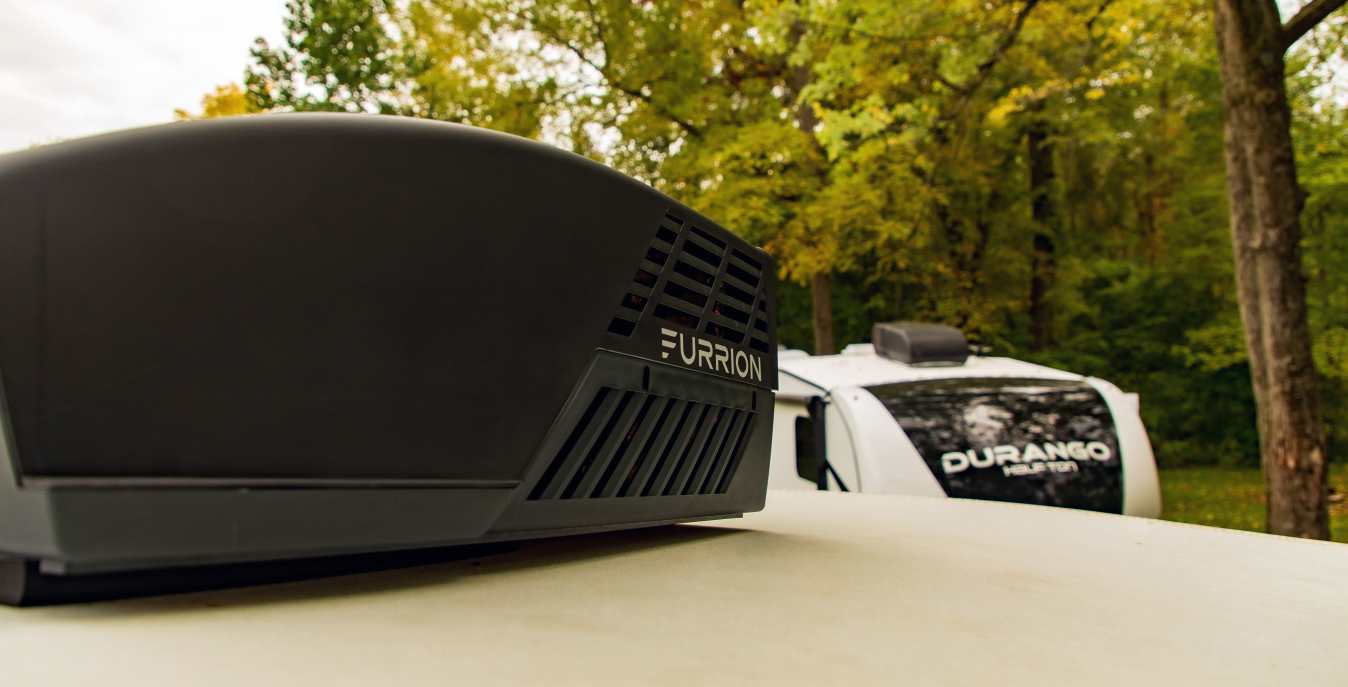
Deciding whether to pursue RV AC repair or go straight to replacing your air conditioner depends on a mix of factors such as your unit’s age, how often it’s breaking down, how much the repair will cost, and what level of comfort you expect from your system. This guide walks through what’s involved in common repairs, when you can tackle issues yourself, when professional help makes sense, and the tipping points where replacement becomes the smarter long-term choice, including options like the Furrion Chill Cube 18K and Chill HE designed for better performance and efficiency.
Explore Your Replacement Options
What Does RV AC Repair Usually Involve?
RV AC repair can range from easy maintenance tasks you can tackle yourself — like cleaning filters or checking connections — to more complex work requiring professional tools and training, such as addressing compressor issues or sealed-system problems.
DIY-friendly repairs
- Filter and vent cleaning: removing dirt and debris to improve airflow is quick and safe.
- Checking power and thermostat settings: a simple step that restores performance.
Repairs that need a pro
- Electrical system fixes beyond basic wiring
- Compressor and sealed-system work
- Refrigerant issues — handling refrigerant safely is regulated and requires certified techs.
Typical Repair Costs
Minor professional repairs often fall below a few hundred dollars, with moderate issues ($300–$800) still reasonable. However, major components, like compressors, can exceed $1,000 — sometimes approaching replacement cost.
Tip: Always get a quote and part breakdown before authorizing major work.
How Long Does an RV AC Unit Usually Last?
Most RV air conditioners last around 8 to 12 years with typical use and maintenance; units that see heavy travel or hot climates may wear out sooner.
Age matters because older systems lose efficiency, use more power, and break down more often. If your unit is nearing the end of its useful life, leaning toward replacement can be a smarter choice, especially if efficiency and reliability are priorities.
When Is RV AC Repair Worth It?
Repair makes sense when the issue is limited, the unit has lots of life left, and the cost of repair is significantly lower than buying new — typically when fixes are minor and infrequent.
Scenarios where repair pays off
- Your RV AC is less than 8–10 years old.
- This is the first major issue you’ve had in years.
- The quoted repair cost is well below half the price of a replacement.
In these cases, fixing the unit can keep you comfortable across one or more seasons without a high upfront cost.
Signs It’s Time to Replace Your RV AC
You should consider replacing your RV air conditioner when the unit is old, requires frequent repairs, or the solution to your current problem (like a compressor failure) costs close to or more than a new unit — and especially if performance or efficiency isn’t meeting your needs.
Clear signals to replace
- Age over 10–12 years — nearing typical lifespan.
- Recurring issues — multiple service calls in one season.
- Major sealed-system failures — compressor, coils, or refrigerant leaks.
- Poor cooling performance even after repairs
- High power draw or inefficiency compared to newer models
When these signs surface, the long-term peace of mind and performance boost from a modern replacement often outweigh repeated repairs.
Comparing Replacement Options
When replacement is the right call, comparing units comes down to cooling capacity, efficiency, noise level, and compatibility with your RV — and choosing an AC unit that fits your travel style and power setup.
Furrion RV AC Highlights
Here are a few options to consider:
-
Furrion Chill Cube 18K
The Chill Cube delivers 18,000 BTUs, making it ideal for tackling extreme heat while reducing power draw and noise, great for boondocking, off-grid travel, and larger rigs. Its variable compressor runs efficiently at varying loads. -
Furrion Chill HE
The Chill HE strikes a balance between performance and efficiency, cooling quickly with lower power draw, a strong choice for everyday travelers who value comfort without excess energy use. -
Furrion Chill HE Low-Profile
Designed for low overhead space with quiet operation and dehumidify and heat modes, this unit adds versatility while saving roof space and power.
DIY Repair Tips (& What to Leave to the Pros)
Some maintenance tasks, like cleaning filters, clearing debris, and checking power connections, are safe DIY jobs that can keep your unit performing better. But anything involving refrigerant, major electrical components, or sealed systems should be handled by professionals.
Safe DIY steps:
- Clean or replace filters
- Inspect and clean vents
- Check thermostat settings and power supply
When to seek professional help:
- Refrigerant issues or leaks
- Compressor, sealed-system, or major electrical repairs
- Diagnostic testing with tools you don’t own
Being proactive with simple tasks makes life easier, but stay within your skill level for safety and performance.
What Comes Next?
Choosing between RV AC repair and replacement comes down to cost, unit age, reliability, and how comfortable you want your travels to be. If repeated repairs are costing time and money (or your current system can’t keep up with your travel style), it’s worth considering modern replacement units that deliver better performance and efficiency.
Explore Your Replacement Options
FAQs About RV AC Repair & Replacement
1. How much does RV AC repair usually cost?
Minor repairs (filters, basic electrical) can be under a few hundred dollars, moderate repairs range roughly $300–$800, and major work like compressor issues can exceed $1,000 — sometimes nearing replacement cost.
2. What is the expected lifespan of an RV air conditioner?
Most RV air conditioners last around 8–12 years with proper maintenance, though heavy use and harsh conditions can shorten that range.
3. How do I know if my RV AC is worth repairing?
If the unit is relatively young, the work is a simple fix, and repair costs are far lower than a new unit, repairing is often worth it. Consider replacement if your unit is old or costs approach a new unit’s price.
4. What are common RV AC problems that can be repaired?
Typical repairable issues include dirty filters, fan motor wear, minor electrical faults, and thermostat problems. Complex issues like compressor failure often lean toward replacement.
5. How do I choose the right replacement RV AC unit?
Look at needed cooling capacity (BTUs), power efficiency, noise levels, and features like variable speed or heat/dehumidify modes to find a unit that matches your travel needs and energy setup.
What Size AC Do I Need for My RV? A Complete Guide for RV Owners
Chill Cube vs. Chill HE vs. Chill HE Low-Profile: What's the Difference?