


An off‑grid RV air conditioner is a cooling system designed to operate without shore power, relying instead on limited energy sources like batteries, solar panels, or small generators. Unlike traditional RV air conditioners that assume constant campground electricity, off‑grid models prioritize efficiency, manageable power draw, and flexible placement. For RV owners who boondock, dry camp, or travel in remote areas, the right off‑grid RV air conditioner can mean the difference between a comfortable interior and an overheated living space that quickly drains available power.
Staying cool off-grid is not about brute cooling capacity alone. It is about matching cooling performance to real‑world power constraints while preserving runtime, battery health, and overall comfort.
Why Off‑Grid Cooling Is Different
RV air conditioning off-grid introduces challenges that do not exist when plugged into shore power. Understanding these differences is essential before comparing products or technologies.
Power Limitations Come First
Most off‑grid setups rely on a combination of batteries, solar charging, and occasional generator use. Power is finite and often inconsistent. Traditional rooftop air conditioners can demand more energy at startup than many battery systems can deliver, even if the system appears adequately sized on paper. Off‑grid cooling requires equipment designed to start gently and run efficiently over time.
Weight, Space, & Noise Matter More
Off‑grid travelers often carry additional gear, water, and energy equipment. Heavy rooftop units add weight where it matters most, while large window units alter the RV structure. Noise also becomes more noticeable when camping in quiet environments or confined spaces. A suitable off‑grid solution must balance cooling output with livability.
Environmental Conditions Are Less Predictable
Boondocking often means exposure to high heat, direct sun, dust, and limited airflow. Cooling systems need to perform reliably in these conditions without relying on external hookups or ideal ventilation. Dry camping in desert climates, in particular, exposes the limitations of traditional RV cooling approaches.

Key Features to Look For in an Off‑Grid RV Air Conditioner
When evaluating an off‑grid RV air conditioner, the most important features are those that balance cooling performance with the realities of limited power availability. Rooftop systems designed with off‑grid use in mind differ significantly from legacy RV air conditioners built solely for campground power.
Energy Efficiency & Low Power Draw
Energy efficiency is foundational for off‑grid air conditioning. A suitable rooftop system must be engineered to manage power draw in a way that aligns with battery‑supported or generator‑assisted setups. This includes efficient compressor operation and system design that avoids unnecessary electrical strain during sustained use.
Rooftop Integration Without Excessive Weight
For many RVs, the rooftop remains the most practical location for air conditioning. An off‑grid‑friendly rooftop unit should minimize added weight while integrating cleanly with standard RV roof openings. Simplified installation and compatibility with existing RV structures reduce both labor and long‑term maintenance concerns.
Battery & Solar Compatibility
Off‑grid RV air conditioners must function predictably when powered through inverters, battery banks, or hybrid solar setups. While not all systems operate directly on DC power, off‑grid‑capable designs account for the realities of battery discharge rates, inverter limits, and real‑world electrical variability.
Interior Noise Management
Noise becomes more noticeable when camping off-grid, where ambient surroundings are quieter and air conditioners may run for longer periods. Rooftop systems designed for modern RV use should manage interior noise levels to maintain comfort during sleep and daily activities.
Multi‑Use Functionality
Some off‑grid cooling systems provide more than basic temperature reduction. Air circulation, humidity control, and spot cooling capabilities can improve comfort while using less energy than full‑space cooling. Multi‑use functionality often delivers better real‑world efficiency than chasing higher BTU numbers.
Comparing Traditional RV AC Units vs. Off‑Grid Options
Not all rooftop RV air conditioners are equally suited for off‑grid use. Understanding how traditional designs differ from newer, efficiency‑focused systems helps clarify why some units perform better when shore power is unavailable.
Conventional Rooftop RV Air Conditioners
Traditional rooftop air conditioners are designed around campground infrastructure. They assume access to stable, high‑amperage shore power and prioritize maximum cooling output over efficiency.
While effective in powered campsites, these units often present challenges off-grid due to higher startup demands, sustained power consumption, and limited flexibility when paired with battery‑based electrical systems.
Off‑Grid‑Optimized Rooftop Air Conditioners
Rooftop systems designed with off‑grid scenarios in mind place greater emphasis on efficiency, controlled electrical demand, and predictable performance. Rather than relying on brute force cooling, these systems are engineered to deliver usable comfort within realistic power limits.
For RV owners who boondock regularly, an off‑grid‑optimized rooftop unit can provide a more practical balance between comfort and energy management than legacy designs.
Why Many Off‑Grid Campers Still Choose Rooftop AC
While alternative cooling strategies exist, rooftop air conditioning remains the preferred solution for many off‑grid RV owners due to its space efficiency and whole‑RV cooling capability.
A rooftop system preserves interior living space, maintains consistent airflow distribution, and avoids temporary or seasonal setups. When designed for efficiency, rooftop air conditioners can integrate into off‑grid electrical strategies without dominating energy consumption.
For travelers who value a clean installation and dependable performance across varied climates, a rooftop approach remains a strong long‑term choice.
Introducing the Chill® Cube as an Ideal Off‑Grid Cooling Solution
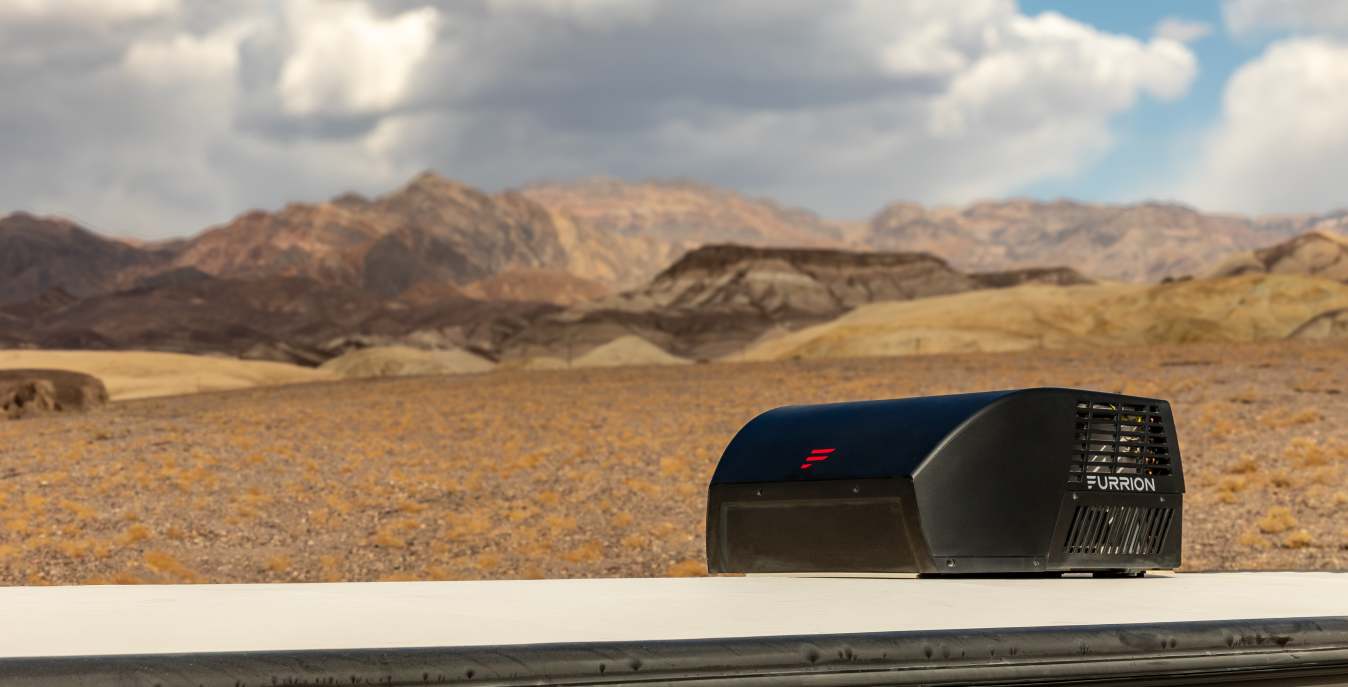
Once the fundamentals of off‑grid cooling are understood, the advantages of a thoughtfully engineered rooftop system become clear. The Furrion Chill Cube aligns with these priorities by focusing on efficient operation, compact rooftop integration, and compatibility with modern RV electrical systems.
As a rooftop air conditioner, the Chill Cube preserves interior space while delivering consistent cooling where it is needed most. Its design emphasizes efficient power use, making it a practical option for RV owners who rely on batteries, solar power, or generator support when camping off-grid.
For boondocking, van conversions with rooftop provisions, and smaller RVs where electrical efficiency matters, the Chill Cube represents a balanced approach to off‑grid RV air conditioning compared to older, more power‑intensive rooftop units.
Common Mistakes When Choosing an Off‑Grid RV AC
One of the most common mistakes RV owners make is assuming all rooftop air conditioners behave the same off-grid. Systems designed for shore power may technically run on generators or inverters but often do so inefficiently.
Other frequent missteps include selecting oversized units that cycle poorly, overlooking inverter and battery limitations, and focusing exclusively on BTU ratings instead of real‑world energy behavior. Successful off‑grid cooling depends on matching system design to actual electrical capacity, not theoretical output.
FAQs About Off-Grid RV Air Conditioners
1. What is an off‑grid RV air conditioner?
An off‑grid RV air conditioner is designed to operate without shore power, using batteries, solar energy, or generators while prioritizing efficiency and manageable power draw.
2. Can you run RV air conditioning off-grid with solar?
Yes, but success depends on system efficiency, solar capacity, battery size, and how the air conditioner is used. Efficient, portable systems are typically better suited for solar‑supported setups.
3. How much power does off‑grid RV air conditioning use?
Power usage varies widely by design and operating conditions. Off‑grid‑focused systems aim to reduce continuous draw and startup load to extend battery runtime.
4. Is a 12V RV AC option better than traditional AC?
12V RV AC options can integrate more easily with battery systems, but overall efficiency and system design matter more than voltage alone.
5. What mistakes should I avoid when choosing an off‑grid RV AC?
Avoid oversizing, underestimating power needs, ignoring airflow requirements, and focusing solely on BTU ratings instead of real‑world efficiency.
What to Know Before Running RV AC on a Generator
How a Variable-Speed Compressor Transforms RV AC Performance