


The best RV air conditioner for boondocking is one that delivers reliable, targeted cooling without overwhelming limited off-grid power systems. Boondocking, also known as dry camping, removes access to shore power, making traditional, power-hungry rooftop AC units impractical for many RVers. The right solution prioritizes energy efficiency, flexible placement, manageable noise levels, and compatibility with batteries, solar setups, or small generators. For RVers who want real cooling while camping off-grid, this balance matters more than maximum BTUs.
Why Off-Grid RVers Care About the “Right” AC
Boondocking appeals to RVers who value quiet locations, open landscapes, and independence from crowded campgrounds. The tradeoff is power. Without hookups, every watt matters, especially when temperatures rise.
Cooling an RV off-grid is challenging because RV interiors heat quickly, generators can be loud or restricted, and battery capacity is finite. Many RVers discover that simply installing a larger air conditioner does not solve the problem. In fact, it often creates new ones.
The best RV air conditioner for boondocking focuses on efficiency, flexibility, and comfort. It cools the spaces that matter most, works within real-world power limits, and supports longer stays without constant generator use.
Why Running RV AC Off-Grid Is Challenging
Running an RV air conditioner while boondocking introduces constraints that do not exist in campground settings. Limited battery capacity, inverter limitations, variable solar input, and generator restrictions all affect how and when cooling is possible. Understanding these constraints is essential before evaluating any off-grid RV air conditioning solution, as it sets realistic expectations for performance, runtime, and overall comfort.
Power Limitations Off-Grid
Boondocking setups typically rely on a combination of batteries, inverters, solar panels, and occasionally portable generators. Every air conditioner must fit within these limits. High startup loads, sustained power draw, and inverter compatibility all affect whether an AC can realistically be used off-grid.
Many rooftop RV AC units draw significant power and are designed for consistent shore power. Running them on batteries alone is often impractical without a large and expensive electrical system.
Noise & Campsite Considerations
Generators can provide power for air conditioning, but noise is a common concern. Quiet hours, nearby campers, and personal comfort all factor into how long a generator can reasonably run. A cooling solution that minimizes generator dependency can significantly improve the boondocking experience.
Heat Management in Small RV Spaces
RVs heat up quickly due to sun exposure, limited insulation, and compact interior layouts. Cooling the entire RV may not be necessary if the goal is to maintain comfort in a specific area, such as a bedroom or workspace. Targeted cooling can be far more efficient than whole-coach cooling.
What to Look for in an RV Air Conditioner for Boondocking
Not all air conditioners are suited for off-grid use. Boondocking-friendly RV AC units must balance power efficiency, cooling capability, and practical deployment within the realities of limited electrical resources. This section outlines the core criteria that matter most when selecting an RV air conditioner for boondocking, helping you identify solutions that align with your power setup, travel style, and comfort needs.

Energy Efficiency & Power Draw
Efficiency is the foundation of off-grid RV air conditioning. Lower power consumption allows an AC unit to run longer on batteries, pair more effectively with solar, and reduce generator runtime.
Off-grid-friendly AC units should work with common RV electrical setups, including inverters and portable power stations. Efficient operation makes power planning more manageable and predictable.
Cooling Performance Sized for Real Use
Boondocking often calls for cooling smaller zones rather than the entire RV. A right-sized cooling solution for a bedroom, office nook, or seating area can maintain comfort without wasting energy on unused space. Oversized systems can cycle inefficiently and drain power without delivering proportional comfort benefits.
Portability & Flexible Placement
A portable RV air conditioner for camping offers significant advantages off-grid. Being able to move a unit where it is needed most allows RVers to adapt to changing conditions throughout the day.
Portability also supports creative setups, such as cooling a toy hauler garage, a converted workspace, or a shaded under-awning area when conditions allow.
Ease of Setup & Use
Permanent installation is not always desirable. Renters, seasonal travelers, or owners who prefer not to modify their RV benefit from cooling solutions that require little to no permanent installation. Simple setup, intuitive controls, and easy storage all contribute to a more practical off-grid experience.
Noise Level & Comfort
Quiet operation matters when camping close to others or trying to sleep in a compact space. A quieter air conditioner improves nighttime comfort and reduces reliance on loud power sources.
Durability & RV-Ready Design
Travel vibration, temperature swings, and frequent setup and teardown demand a durable design. Compact, well-built units designed with RV use in mind tend to perform more reliably over time.
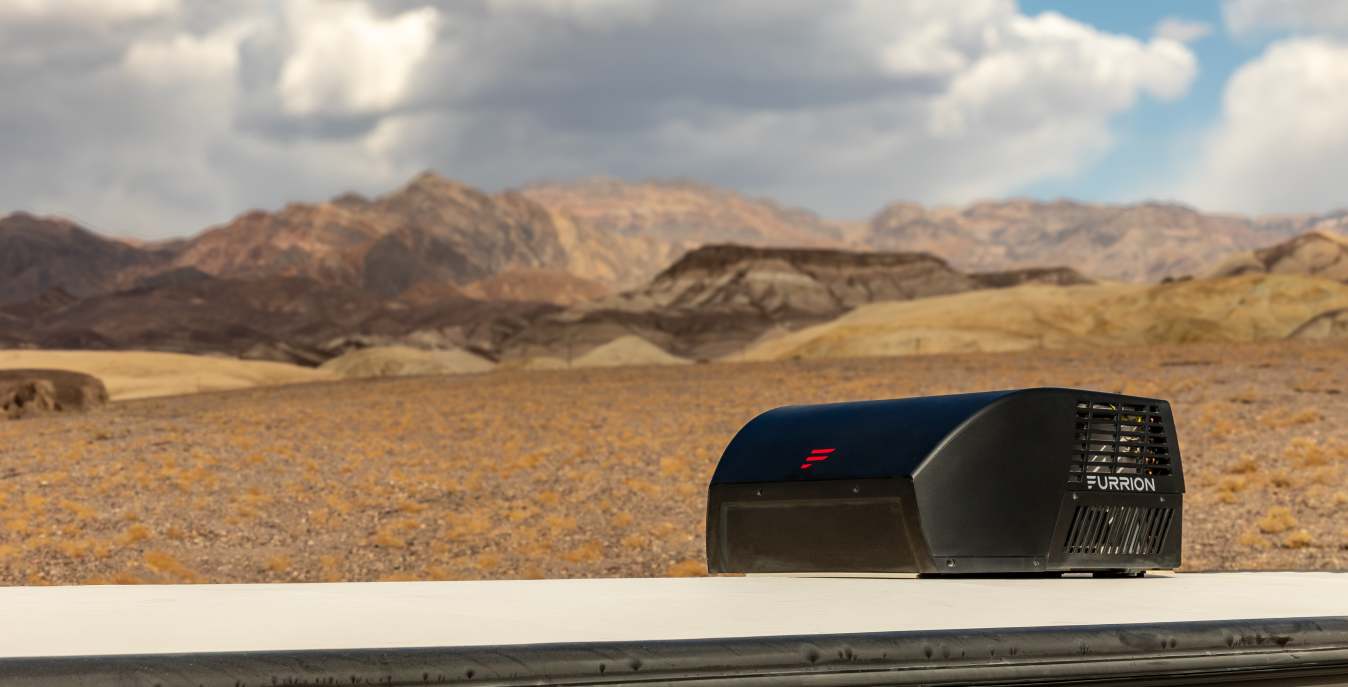
Furrion Chill® Cube: A Purpose-Built Cooling Option for Boondocking
Chill Cube is a rooftop RV air conditioner engineered to better align with the demands of off-grid camping. While it installs in a traditional rooftop location, its design emphasis differs from many conventional RV AC units that prioritize maximum output without regard for power efficiency.
Instead of focusing solely on whole-coach cooling at high power draw, Chill Cube is built to deliver dependable cooling with more thoughtful energy use. This makes it a more realistic option for RVers who rely on batteries, solar supplementation, or limited generator runtime while boondocking.
By combining rooftop installation with an efficiency-minded approach, Chill Cube offers a familiar form factor while addressing some of the most common challenges associated with running RV air conditioning off-grid.
Chill Cube Pros & Tradeoffs Compared to Other RV Cooling Options
Advantages for Boondockers
Chill Cube offers several benefits that are especially relevant for RVers who spend time dry camping:
- More power-conscious operation compared to many traditional rooftop RV air conditioners
- Permanent rooftop installation that frees up interior space
- Designed for RV use, including travel vibration, temperature swings, and long-term exposure
- Delivers consistent cooling without relying exclusively on full-time generator use
These characteristics position Chill Cube as a strong option for RVers looking for a low-power RV air conditioner that still functions as a true rooftop system.
Considerations to Keep in Mind
Like any rooftop AC, Chill Cube works best when paired with realistic expectations and proper power planning:
- It is still a rooftop air conditioner and requires adequate electrical support from batteries, an inverter, solar, or a generator
- Cooling performance and runtime will depend on overall RV size, insulation, ambient temperatures, and power availability
Understanding these factors helps RVers determine whether Chill Cube fits their specific boondocking setup and travel style.
How Chill Cube Compares to Other RV Cooling Approaches
Traditional rooftop RV air conditioners are effective at cooling an entire coach but often come with higher power demands that make extended off-grid use challenging without frequent generator operation.
Fans and passive ventilation consume minimal power but offer limited relief during extreme heat or high humidity, especially in enclosed RV interiors.
Evaporative coolers can provide cooling in very dry climates, but lose effectiveness as humidity increases, and do not function as true air conditioners.
Chill Cube occupies a practical middle ground. It delivers the convenience and reliability of a rooftop AC while placing greater emphasis on efficiency and off-grid usability. For RVers who want meaningful cooling without committing to constant generator use, it represents a balanced approach rather than an all-or-nothing solution.
Practical Tips for Running an RV AC While Boondocking
Even the most efficient RV air conditioner requires thoughtful use when operating off-grid. How and when cooling is used can significantly impact power consumption, battery health, and overall boondocking comfort. This section provides practical, non-technical strategies for managing RV air conditioning during dry camping, with a focus on maximizing comfort while minimizing unnecessary power drain.
Power Planning Basics
Understanding your battery capacity, inverter limits, and available power sources is essential. Even an efficient AC requires thoughtful planning to avoid unexpected shutdowns or drained batteries.
Many RVers pair targeted AC use with solar charging during the day or short generator sessions to maintain battery levels.
Smart Cooling Strategies
Cooling a space before the hottest part of the day can reduce overall power demand. Focusing on the area where you spend the most time, such as a sleeping area at night, improves efficiency.
Supporting measures like window shades, reflective covers, and improved ventilation help reduce heat load and improve AC performance.
Maintenance & Efficiency
Keeping filters and vents clean ensures proper airflow and consistent performance. Proper storage between trips helps protect the unit from damage and extends its usable life.
Common Misconceptions About RV Air Conditioning & Boondocking
“You cannot run any AC while boondocking.”
“Bigger air conditioners are always better.”
“Fans are enough in all conditions.”
“All portable air conditioners are the same.”
RV-specific considerations such as power efficiency, size, and durability make some portable units better suited to off-grid travel than others.
FAQs About the Best RV Air Conditioners for Boondocking
Running an RV air conditioner while boondocking raises practical questions about power requirements, performance limits, and real-world usability. This FAQ section provides clear, concise answers to the questions RVers most often ask when evaluating off-grid cooling options.
1. Can you run an RV air conditioner while boondocking?
Yes, with the right equipment and expectations. Targeted, efficient cooling solutions can operate off batteries, solar, or limited generator use.
2. What makes an air conditioner off-grid friendly?
Lower power draw, compatibility with RV electrical systems, quiet operation, and the ability to cool smaller spaces efficiently.
3. How much power does a low-power RV air conditioner use?
Power use varies by model and conditions. Efficient units are designed to reduce overall draw compared to traditional rooftop systems.
4. Do you need a generator to use AC while dry camping?
Not always. Some setups rely on batteries and solar, while others use short generator sessions to support cooling.
5. Is rooftop AC practical for extended boondocking?
Rooftop units can work, but often require significant power infrastructure and frequent generator use. Models designed with efficiency in mind, such as Chill Cube, are better optimized for boondocking by prioritizing more practical power use and off-grid compatibility.

What Is a High-Efficiency RV AC?
What to Know Before Running RV AC on a Generator