


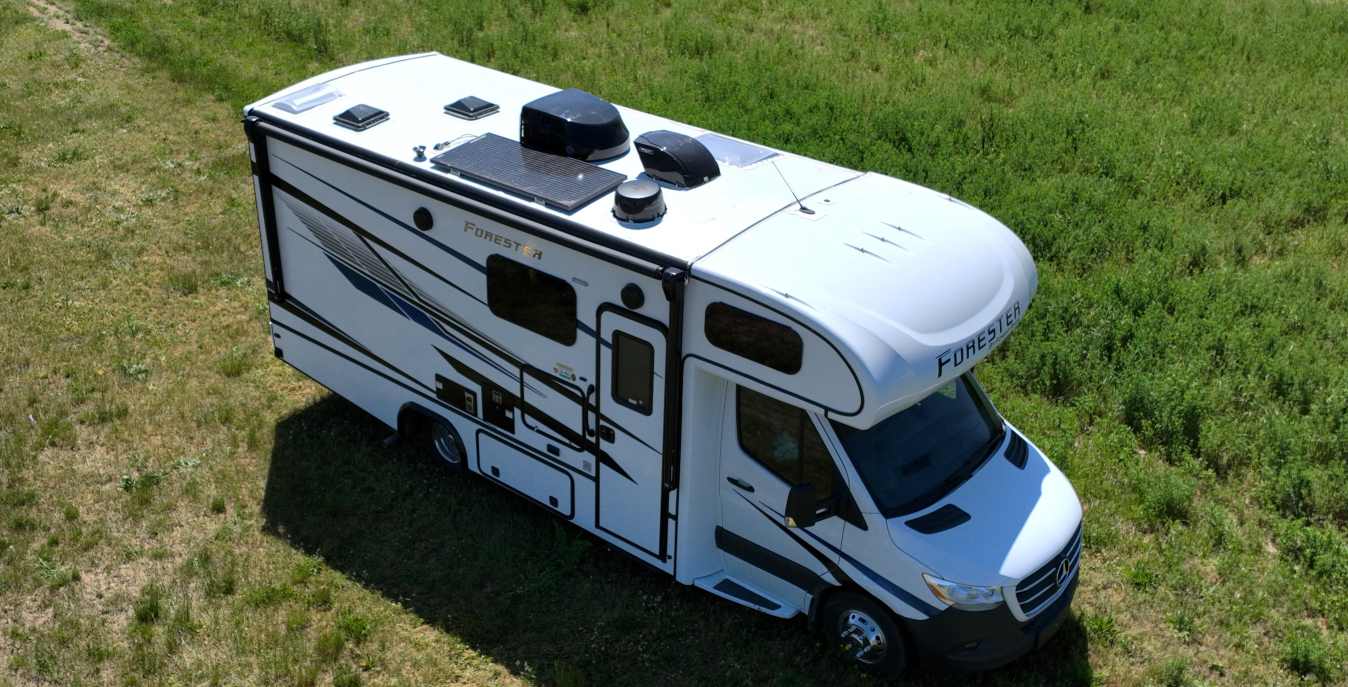
An RV solar air conditioner refers to any RV air-conditioning setup powered by solar panels and a battery bank rather than shore power or a generator. Running AC on solar has become increasingly appealing as RVers seek quieter, cleaner, and more self-sufficient ways to cool their living spaces while camping off-grid. Air conditioners draw more power than nearly any other RV appliance, so understanding what is required to run one from solar power is essential before investing in a system.
This guide explains how solar integrates with RV electrical systems, what equipment is required, realistic expectations based on system size, and the common misconceptions RVers encounter when planning off-grid cooling.
Why More RVers Want Solar-Powered Cooling
Solar adoption in the RV community has surged. Lithium batteries have become more accessible, panels are more efficient, and many travelers are spending more time boondocking, especially in warm-weather states. For many, cooling without a generator represents freedom: freedom from noise, from campsite limitations, and from costly fuel.
At the same time, the desire for quiet cooling must be balanced with the reality that air conditioners require high continuous wattage. Even with efficient components, running AC on solar power is not as straightforward as running lights, fans, or a refrigerator. The challenge is not whether it can be done, but how to design a system large enough to meet your cooling expectations.
Can an RV Air Conditioner Run on Solar?
Yes, an RV air conditioner can run on solar, but the power does not come directly from the solar panels. Instead, solar panels charge a battery bank, and the air conditioner runs from those batteries, either through a DC connection or through an inverter that provides 120V AC output.
Understanding these energy pathways is essential:
- Solar panels → charge controller → battery bank
- Battery bank → DC air conditioner or
- Battery bank → inverter → traditional AC unit
The limiting factor is usually not panel count, but how much stored energy is available in the batteries and how much power the air conditioner requires to start and run.
A rooftop AC typically draws 1,200–1,800 watts continuously. This means that even large solar arrays struggle to produce enough power to keep up with AC demand in real time. Batteries bridge that gap, but they must be large enough to handle sustained discharge rates.
Solar-powered AC is absolutely possible, but it requires thoughtful planning and realistic expectations.
Cooling System Options for Running RV Air Conditioning on Solar Power
Solar-powered cooling in an RV can be approached in multiple ways, and understanding these options is essential before sizing your solar and battery system. The right setup depends on your energy demands, camping environment, and how much of your cooling you expect to run from solar alone. Below are the three main ways RVers integrate air conditioning with solar power, ranging from the most efficient DC systems to supplemental hybrid strategies.

Option 1: High‑Efficiency 12V & 24V DC Air Conditioners
DC air conditioners are the most efficient option for off-grid cooling. These systems are specifically designed to run from battery power with no inverter, which eliminates the energy losses associated with inverting DC power to AC power.
A typical 12V or 24V DC air conditioner draws between 300 and 700 watts, depending on ambient temperature, compressor speed, and cabin insulation. This lower wattage makes them far more compatible with solar power than traditional rooftop units.
How DC Air Conditioners Operate
DC units use variable-speed compressors similar to those in modern home mini-split systems. Instead of cycling on and off, they modulate gradually. This reduces both surge load and average consumption. Their stable power draw is easier on both batteries and solar arrays.
Benefits of DC Air Conditioners
DC units provide several advantages for solar-based cooling:
- They avoid inverter losses
- Their startup surge is significantly lower, often only slightly higher than running wattage
- They are well-suited for lithium-based systems that deliver high discharge rates
- Their compressor technology minimizes power spikes and keeps consumption predictable
For those who frequently boondock, this predictability is one of the biggest advantages.
Drawbacks & Limitations
The tradeoff is lower cooling capacity. Many DC systems fall in the 5,000–10,000 BTU range. They are adequate for vans, compact trailers, or insulated RVs, but they may not match the cooling output of a 13.5K or 15K BTU rooftop unit.
Installation can also be more complex since it may require custom wiring, ducting, or mounting hardware, depending on the RV layout.
Typical System Sizing for DC AC Units
Many RVers successfully run DC air conditioners using:
- 400–800 watts of solar
- 200–400 Ah lithium battery capacity
- An MPPT charge controller sized for total panel wattage
- Appropriate gauge wiring to handle sustained loads
With sufficient insulation and moderate heat, DC air conditioners can run for several hours or longer, depending on battery size and solar conditions.
Option 2: Running a Traditional Rooftop AC With Solar & Batteries
Most RVs are equipped with 120V rooftop air conditioners, so many RVers want to know whether they can run these units on solar power without replacing them. The answer is yes, but system requirements are substantial.
Power Demands
A 13.5K or 15K BTU rooftop AC typically requires:
- 1,500–3,000 watts to start
- 1,200–1,800 watts to run
Older or less efficient units often have even higher startup surges, making them difficult to operate from an inverter unless a soft-start device is installed.
Essential Components for 120V AC Cooling on Solar
A sufficiently large solar array
A robust array is required, often around:
- 1,000–1,200 watts for short cooling periods
- 1,500–2,000 watts for longer cooling windows
- 2,000+ watts for extensive off-grid cooling
These numbers assume ideal sun conditions. Cloud cover, panel angle, and heat all reduce output.
A lithium battery bank
Lithium (LiFePO4) batteries are preferred because they:
- Deliver higher discharge rates
- Allow deeper discharge without damage
- Maintain voltage under heavy loads
- Charge faster from solar
A practical system usually starts at:
- 400–600 Ah of lithium for short AC run times
- 600–800+ Ah for extended cooling
Lead-acid batteries struggle with high current draw and degrade quickly under such loads.
A high-quality inverter
Running a rooftop AC requires an inverter with:
- 3,000 watts continuous output
- 5,000–6,000 watts surge capacity
Pure sine wave models are essential for compressor-based appliances.
Soft-start devices
Soft-start devices reduce startup surge by up to 60%. This makes AC units far more compatible with inverters and reduces stress on the battery bank. Many RVers consider soft-start installation mandatory for off-grid AC.
What to Expect with This Setup
A typical 1,200-watt solar / 400-Ah lithium setup might provide:
- 2–3 hours of cooling on a sunny afternoon
- 4–6 hours in mild conditions or evening use
- Minimal to no overnight runtime unless batteries are significantly larger
This system can be extremely useful for short-term comfort breaks or heat management during transitions, but it is not a replacement for continuous grid-level cooling capability.
Option 3: Hybrid & Supplemental Solar Cooling Strategies
Not every RVer intends to fully run their rooftop AC from solar. Many instead use solar to supplement other power sources, extending comfort while controlling generator or shore power use.
Hybrid Cooling Setups Typically Include:
- Solar assisting the battery bank
- Occasional generator usage for extended cooling
- Alternator charging via DC-to-DC converters
- Shore power used only when necessary
Why Hybrid Systems Are Popular
Hybrid systems are the most flexible and cost-effective because they allow RVers to:
- Reduce generator run time
- Stay cool during peak sun hours without overtaxing batteries
- Maintain steady charge levels
- Avoid oversizing solar arrays
Portable solar panels can also be used to supplement roof-mounted arrays, especially during stays where panels can be aimed directly at the sun.
Hybrid setups are particularly common among weekend boondockers, travelers who stay at Harvest Hosts locations, and RVers camping in mixed sun environments where shading is unpredictable.
Key Considerations Before Committing to Solar-Powered AC
Total Solar Panel Wattage
Air conditioning is one of the most energy-intensive RV functions, so an appropriately sized solar array is critical. Evaluating available roof space is the first step. Many RVs cannot fit more than 800–1,200 watts of panels without creative layouts or high-efficiency panels.
Factors influencing solar output include:
-
Temperature: Hot surfaces reduce panel efficiency.
-
Angle: Flat-mounted panels rarely deliver full wattage.
-
Shading: Brief shadows can reduce output dramatically.
- Seasonal daylight: Winter and shoulder seasons provide less energy.
Careful planning is essential to understand real — not theoretical — performance.
Battery Bank Size & Chemistry
Battery storage determines how long AC can operate after the sun sets or when clouds reduce solar output. Lithium batteries offer:
- Higher usable capacity
- Better performance under high loads
- Reduced voltage drop
- Lightweight construction
Inverter Type & Capacity
For 120V systems, the inverter must reliably handle both continuous draw and startup surge. A soft-start device helps minimize peak loads, but proper inverter sizing remains crucial.
Modified sine wave inverters are unsuitable for running air conditioners. Always use pure sine wave models.
Roof Space & Installation Constraints
RVs with multiple vents, skylights, antennas, or curved roof sections may lack space for large solar arrays. Panels must be placed to minimize shading from these components.
Some travelers increase solar capacity by:
- Adding tilting mounts
- Using higher-wattage panels
- Employing ground-deployed foldable arrays
- Installing rails to extend panel coverage
Space planning is often the most overlooked constraint.
Climate & Camping Style
Temperature and humidity directly affect AC runtime. In hot climates, both solar output and AC efficiency can suffer. Shade, humidity, and interior heat load all influence energy usage. Travelers who camp primarily in forests may find that even large solar arrays cannot reliably support AC usage due to shade. Those who boondock in deserts or open plains usually have more consistent solar production but face higher cooling loads.
Realistic Expectations for Off-Grid Cooling
Off-grid AC performance varies widely based on system size and environmental factors. Most RVers find that solar allows for partial cooling windows rather than all-day climate control.
Example scenario
System:
- 1,200 watts solar
- 400 Ah lithium
- Soft-start-equipped 13.5K BTU rooftop AC
Expected results:
- 2–3 hours of cooling mid-day
- 4–6 hours during mild mornings or evenings
- Limited ability to run overnight
Increasing battery capacity to 600–800 Ah extends runtime, but nighttime cooling still requires significant stored energy. DC air conditioners are more suitable for overnight usage, since they draw less power and lack the high surges of traditional rooftop units.
What RVers Often Underestimate
- Solar panels rarely produce their rated wattage
- Batteries discharge more quickly under high loads than under moderate ones
- Heat waves dramatically increase AC consumption
- Panel temperature affects output as much as sunlight
Solar can effectively support cooling, but should not be expected to replace the consistency of shore power unless the system is extremely large.
Common Mistakes & Misconceptions
- Overestimating solar production: A 200-watt panel rarely produces 200 watts in real-world conditions. Heat, angle, and shading reduce output.
- Underestimating battery needs: Air conditioning requires sustained, high-current draw. Many RVers initially plan for too little battery capacity, resulting in short cooling windows.
- Assuming any AC can operate on solar: Older rooftop ACs often have high startup demands. Without a soft-start device, running these units off an inverter can be difficult.
- Forgetting that solar is weather-dependent: Clouds, haze, or partial shade significantly affect energy generation.
- Relying on portable panels for AC: Portable panels are excellent for battery maintenance, but they rarely produce enough energy for air conditioning.
Where Furrion Fits Into Solar-Powered RV Cooling Systems
Furrion manufactures energy-efficient RV rooftop air conditioners designed for reduced power draw and improved cooling performance. While no traditional AC operates solely from solar power, efficient compressor design and optimized airflow can help reduce overall system load, making off-grid operation more attainable for RVers with appropriately sized solar and battery setups.
FAQs About Running an RV AC on Solar Power
Solar-powered RV cooling involves many variables, so RVers often have detailed questions about system sizing, runtime expectations, battery choices, and what’s realistically achievable off-grid. The following FAQs provide clear, concise answers to the most common questions RV owners ask when exploring how to run an air conditioner using solar power.
1. How many solar panels do I need to run an RV AC?
Many setups require 1,000–2,000 watts of solar for meaningful runtime, depending on battery size, AC efficiency, and sunlight conditions.
2. Can a DC air conditioner run all night on solar?
A DC unit can run overnight if the battery bank is sufficiently large, typically 300–400 Ah of lithium or more. Solar recharges the bank during the day.
3. Do soft-start devices make running AC on solar easier?
Yes, they reduce compressor startup surge, making inverters and battery banks significantly more compatible with rooftop AC units.
4. Is lithium required for solar-powered AC?
Lithium is strongly recommended because it handles high current loads better than lead-acid and offers more usable capacity.
5. Can portable solar panels power an RV AC?
Portable panels can supplement rooftop solar, but they rarely provide enough wattage to run air conditioning without a large installed system.
6. Can solar run two air conditioners?
Running two AC units requires an exceptionally large solar and battery system. Most off-grid RVs only support one unit at a time.
Can You Run Your RV AC on Battery Power?
What Is a High-Efficiency RV AC?