


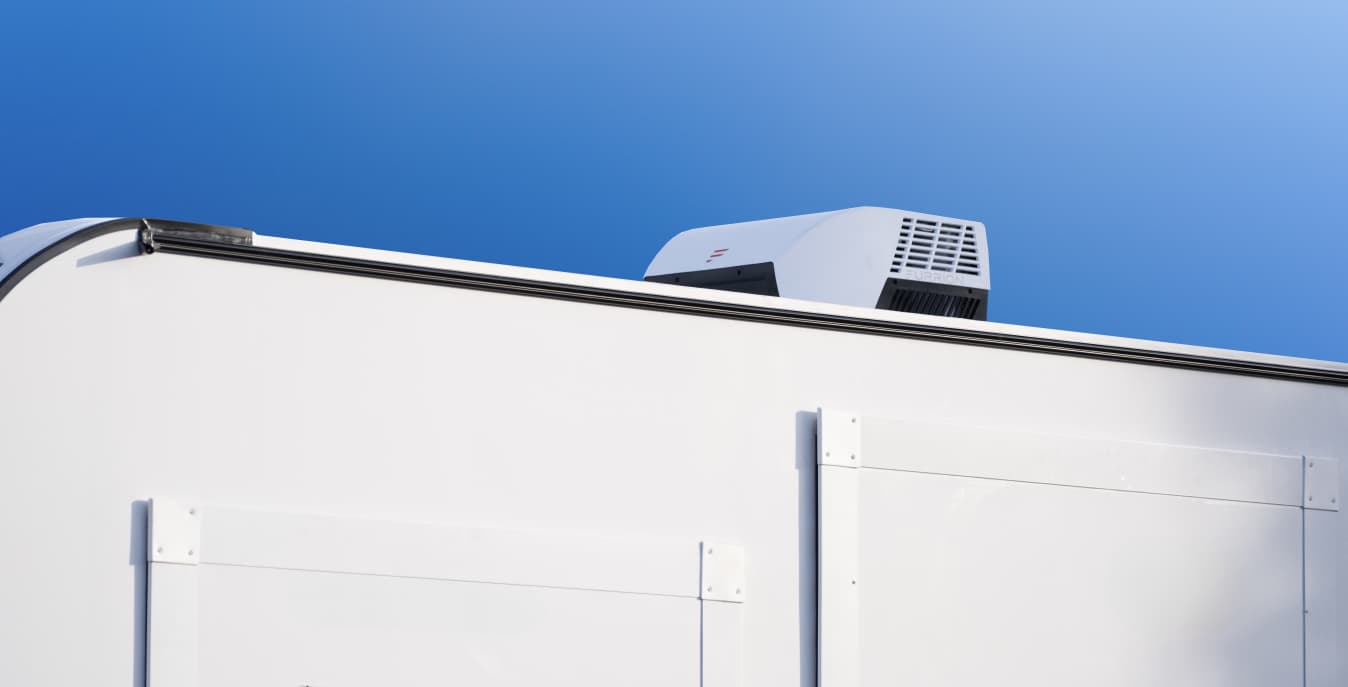
If you’re replacing your RV air conditioner, the most important number to understand is BTU. It determines how much cooling power your unit delivers, whether it can handle extreme heat, and whether it will actually keep your space comfortable. This guide explains how BTUs work, how to calculate the right size for your rig, and how to choose between modern cooling options designed for performance, efficiency, and easier installation.
Shop Furrion Chill® RV Air Conditioners
What Is a BTU and Why Does It Matter for RV Air Conditioning?
A BTU (British Thermal Unit) measures how much heat an air conditioner can remove from your RV in one hour, which determines how powerful the cooling system is.
A BTU is a unit of heat energy used to describe cooling capacity. In practical terms, it tells you how much heat an air conditioner can remove from a space over time. Higher BTU ratings indicate more cooling power, which is essential in larger RVs, poorly insulated spaces, or hot climates.
In HVAC terms, one BTU equals the energy required to raise the temperature of one pound of water by one degree Fahrenheit. That measurement may sound technical, but in everyday use it simply helps determine whether an air conditioner can keep up with the heat load inside your RV.
Selecting the right BTU rating is critical. Too little cooling capacity leaves you uncomfortable and overworks the system. Too much can lead to inefficient cycling, humidity issues, and unnecessary energy consumption.
For RV owners evaluating replacement options, BTUs are the first filter. They define what category of air conditioner you should even consider before comparing features, noise, efficiency, and installation.

How Many BTU Do I Need for My RV?
Most RVs require between 9,500 and 15,000 BTUs, while larger motorhomes or those used in hot climates may need 18,000 BTUs or dual units.
RV cooling requirements vary by size, insulation, and climate. As a general rule:
- Small trailers and camper vans: ~9,000–11,000 BTUs
- Mid-size RVs (25–35 ft): ~13,500 BTUs
- Larger motorhomes and 5th wheels: ~15,000 BTUs or more
- Extreme heat or large interior volumes: 18,000 BTUs or dual systems
These ranges align with common industry sizing guidance that ties RV length and interior square footage to cooling capacity.
Many standard RVs come with 13,500-BTU systems because they strike a balance between cooling power and electrical demand. Larger or hotter environments often justify stepping up to higher output systems to maintain performance.
When replacing an air conditioner, this is the baseline decision: match your existing cooling class or step up if your current unit struggles in heat.
How to Calculate the Right BTU Size for Your RV
Multiply your RV’s square footage by roughly 20 BTUs per square foot, then adjust for climate, insulation, and usage patterns.
A simple calculation helps determine the starting point:
- Measure the interior square footage of your RV.
- Multiply by about 20 BTUs per square foot.
- Adjust based on real-world factors like sun exposure, insulation, and occupancy.
The 20 BTU-per-square-foot guideline is commonly used in HVAC sizing and provides a practical baseline for cooling calculations.
Example
- 250 sq. ft. interior × 20 BTUs = ~5,000 BTUs baseline
- Add heat load from sunlight, cooking, electronics, and occupancy
- Final recommended system: often 9,500–13,500 BTUs
RV environments amplify heat more than stationary homes due to thinner walls, roof exposure, and smaller air volumes. This is why real-world sizing frequently lands higher than the raw math.
Factors That Change Your BTU Needs
Climate, insulation, ceiling height, sun exposure, and occupancy all affect how much cooling power your RV requires.
These variables can dramatically change performance:
- Climate: Desert and southern regions increase cooling demand
- Sun exposure: Direct roof heating adds load
- Insulation quality: Older RVs lose cooled air faster
- Ceiling height and layout: Open floor plans require more airflow
- Number of occupants: More people add heat
Hot climates alone can justify stepping up one cooling level, even when square footage suggests a smaller unit.
For replacement buyers, this often explains why an existing system “worked fine before” but now struggles, especially after insulation wear or heavier travel in warm regions.
Signs You Need More BTUs (Or a Better AC System)
If your current unit runs constantly, struggles in heat, or never reaches the set temperature, you likely need more cooling capacity or a higher-performance system.
Common replacement triggers include:
- AC runs nonstop but can’t maintain temperature
- Interior stays warm in midday sun
- High humidity and inconsistent cooling
- Loud operation or aging components
- Generator strain during operation
Older rooftop systems often lose efficiency over time. Replacing them with modern compressor technology can dramatically improve performance without requiring multiple units.
Modern RV Cooling Options: What’s Changed
New RV air conditioners improve cooling through variable-speed compressors, inverter compatibility, quieter operation, and simplified installation.
Traditional RV ACs typically use single-speed compressors. Newer designs improve performance by adjusting output dynamically based on heat load.
Key advancements include:
- Variable-speed cooling for consistent temperatures
- Reduced energy draw and improved efficiency
- Lower noise levels
- Generator and inverter compatibility
- Streamlined installation processes
These upgrades matter most for replacement buyers who want stronger cooling without adding complexity.
Choosing the Right Furrion RV Air Conditioner
Choose based on climate, RV size, and cooling expectations, with high-output systems best suited for extreme heat and performance-focused upgrades.
When evaluating replacement options, consider how each system aligns with your use case.
Chill Cube 18K
The Chill Cube 18K RV AC is positioned for high-demand cooling environments, including desert and extreme-heat travel.
Key strengths:
- Variable-speed compressor performance
- Generator and inverter compatibility
- High efficiency under load
- Quiet operation
- Simplified installation
- Compact footprint
This system is engineered for situations where standard rooftop ACs struggle, especially in larger interiors and intense sun exposure.
Chill HE
The Chill HE unit has balanced cooling performance for mid-size RVs with improved efficiency and modern features.
HE Low-Profile
Designed for clearance-sensitive installations while maintaining dependable cooling output.
Why High-BTU Systems Matter in Extreme Heat
Higher-BTU systems maintain cooling performance when temperatures spike, preventing constant cycling and improving comfort.
Extreme climates dramatically increase heat load. A higher-capacity unit:
- Reaches target temperature faster
- Maintains cooling without overworking components
- Supports longer runtimes with less strain
- Improves overall comfort and airflow
This is where stepping into a higher-output system becomes less about luxury and more about usability.
Replacement Decision: When to Upgrade Instead of Repair
Replace your RV AC when cooling performance declines, noise increases, or repair costs approach the price of a modern high-efficiency system.
Consider replacement when:
- Repairs are recurring
- Cooling capacity no longer meets your environment
- Electrical efficiency has declined
- Travel plans include hotter climates
Modern systems can improve performance, reduce noise, and simplify operation compared to aging rooftop units.
Find Your AC: How to Choose the Right Model
Start with BTU sizing, confirm climate needs, then compare efficiency, noise, and installation requirements.
Decision path:
- Determine square footage
- Factor climate and sun exposure
- Identify baseline BTU requirement
- Compare modern systems by performance features
- Select a system aligned with replacement goals
For most replacement scenarios:
- Moderate climates → standard BTU upgrade
- Large RVs → higher capacity
- Extreme heat → high-output performance systems
FAQs: BTUs, RV AC Sizing, & Replacement Decisions
1. How many BTU do I need for my RV?
Most RVs need between 9,500 and 15,000 BTUs, depending on size and climate, while larger rigs or extreme heat often require higher-capacity systems.
2. Is more BTU always better?
No, oversizing can cause inefficient cycling and humidity issues, while undersizing leads to constant operation and poor cooling.
3. What happens if my RV AC is too small?
It will run continuously, struggle in hot conditions, and fail to maintain comfortable temperatures.
4. Can I upgrade to a higher BTU system?
Yes, many replacement scenarios involve stepping up in capacity, especially when moving into hotter climates or larger interior layouts.
5. Do modern RV air conditioners use less power?
Newer systems with variable-speed compressors and inverter compatibility often improve efficiency compared to older single-speed units.
6. How do I know it’s time to replace my RV AC?
Loss of cooling performance, excessive noise, repeated repairs, or rising energy demand are common indicators that it's time to replace your RV AC.
7. What BTU works best in desert climates?
Higher-capacity systems are typically recommended to maintain performance in extreme temperatures.

Final Takeaway
BTUs define whether your RV air conditioner can keep up with real-world heat. Understanding sizing, climate factors, and modern system capabilities helps you move beyond guesswork and into confident replacement decisions.
For travelers upgrading aging rooftop units, today’s cooling systems deliver quieter operation, smarter efficiency, and stronger performance where it matters most. The right choice starts with BTUs and ends with a system built to handle how and where you travel.
Chill Cube vs. Chill HE vs. Chill HE Low-Profile: What's the Difference?
How to Deal with a Loud RV Air Conditioner